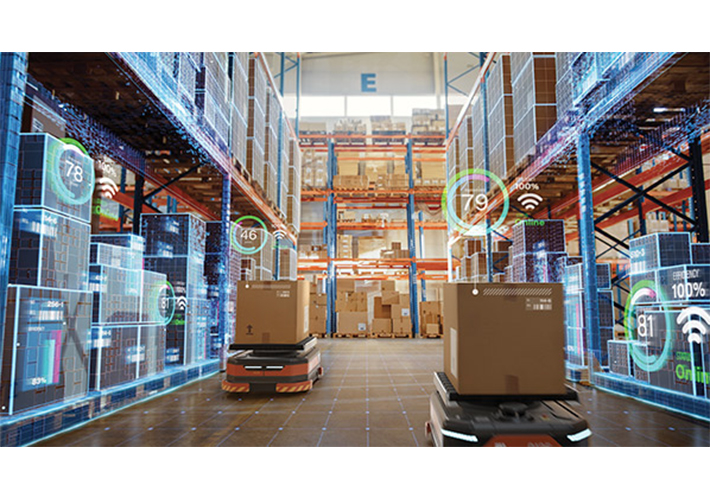
The future-ready warehouse.
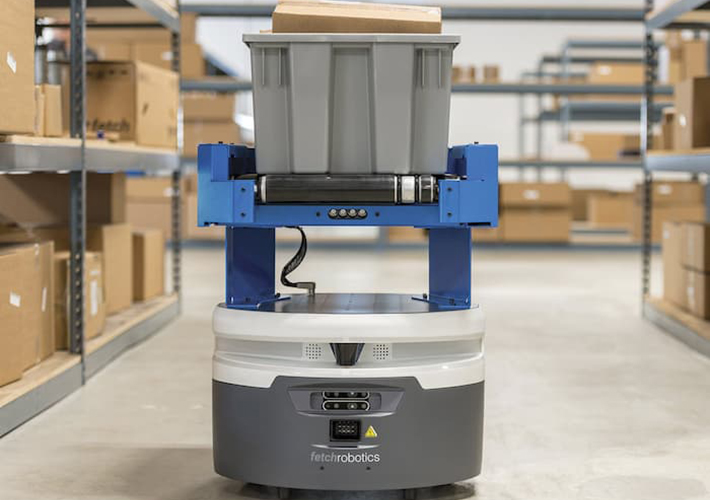
Whilst human workers are still integral to the supply chain, harmonising technology and people in an optimal way will ensure maximum efficiency and lowest error rate.
The rise of digitised supply chains typified by Industry 4.0 is starting to transform warehouse and manufacturing operations. Customer demand is also driving change, alongside the introduction of automation, data sharing, Artificial Intelligence (AI) and robotics. Indeed, 81% of supply chain leaders report that their customers expect more customised products than they did three years ago1.
As a result, some businesses are finding that their current warehouse management systems (WMS) are struggling to cope. The COVID-19 outbreak has added further strain and uncertainty, amplifying worker shortages and accelerating the shift away from physical stores to ecommerce fulfilment. It is now vital for organisations to embrace new technology, invest in the future-ready warehouse and optimise their digital supply chain. Over the next five years, decision makers will upgrade their systems to improve productivity, provide powerful real-time information and enable data-driven decisions2.
• Increasingly complex warehouse operations
A study covering Europe’s three largest e-commerce markets (France, Germany and the UK) showed that the share of consumers that do more than half of their total purchases online has increased between 25% and 80% since the COVID-19 outbreak. Six out of ten consumers say that they will continue to buy as much online as they do today after the pandemic has passed3.
Warehouse operations will be required to fulfil a wider variety of orders and delivery types (next day, same day, click-and-collect etc.), more practical tracking visibility and simple returns. A wider variety of orders isn’t the only complexity; it's also the vast array of suppliers and the need to effectively manage smooth inbound flow. One retailer alone can have several stores all working through a single warehouse.
These top six challenges are causing leaders to rethink warehouse strategies:
• Current IT/technology utilisation
• Labour recruitment
• Labour efficiency or productivity
• Capacity utilisation
• Quality of warehouse management system data
• Inventory management